 The Quiet Critic Within:
How Our Judging Mind Shapes Love, Learning, and Belonging
We all carry an inner voice that sorts, labels, and measures. It tells us what is “good” or “bad”, “right” or “wrong”, “worthy” or “unworthy.” This is the discriminating mind, a survival tool honed over millennia to keep us safe. But in our modern lives, this mental habit often does more harm than good. It builds walls in our relationships, stifles curiosity, and isolates us in social spaces. The good news? We can soften its grip. By understanding how this mindset shapes our experiences, we begin to reclaim something far more powerful: the ability to connect and belong without fear.
In relationships, the discrimination mind acts like a relentless editor. It scans for flaws in others, replays past mistakes, and drafts mental lists of why someone might disappoint us. A partner’s forgetfulness becomes a referendum on their love; a friend’s canceled plan morphs into proof of indifference. Over time, this habit starves intimacy. Love thrives in openness, yet the judging mind mistakes its critiques for protection. It forgets that people, including ourselves, are not puzzles to solve but mysteries to embrace.
The antidote is not to ignore red flags or suppress intuition. It is to pause when criticism arises and ask: Is this thought fostering fear or fostering trust? Relationships deepen not when we perfect each other, but when we meet each other where we are, messy, imperfect, and human.
Learning something new, a language, a skill, a perspective, requires vulnerability. But the discriminating mind often mistakes early clumsiness for failure. It compares our first draft to someone else’s masterpiece, our tentative steps to another’s marathon. “I am too old to start,” it whispers. “What if I look foolish?” This mindset turns learning into a performance rather than a process.
Yet growth has always been messy. A child does not judge their first steps: they simply reach for the next wobbling milestone. What if we approached learning with that same gentle curiosity? Progress is not linear, and mastery is not the absence of mistakes, it is the accumulation of them. Every misstep is a teacher, not a verdict.
In social settings, the discriminating mind becomes a silent saboteur. It convinces us we are “too much” or “not enough”, too quiet, too awkward, too different. It scans rooms for evidence we don’t belong, interpreting laughter as mockery or silence as rejection. Ironically, this self-consciousness often distances us further. Connection flourishes in presence, yet the judging mind traps us in a hall of mirrors, reflecting only our doubts.
Here is the truth few admit: Everyone feels this way sometimes. The person across the room who seems so confident? They have likely rehearsed conversations in their head, too. When we approach others not as critics but as fellow travelers, acknowledging shared insecurities, the walls begin to crumble. Vulnerability, not perfection, is the bridge to belonging.
Changing this mindset is not about silencing the inner critic overnight. It begins with noticing its patterns. When judgment arises in relationships, try replacing “Why are they like this?” with “What can I learn from this?” When learning feels daunting, shift from “I can’t do this” to “I can’t do this yet.” In social moments, trade “Do they like me?” for “How can I show up authentically?”
Small acts of self-compassion rewire the brain over time. Celebrate tiny victories: a difficult conversation approached with patience, five minutes spent practicing a skill without self-reproach, a party where you stayed present instead of retreating into analysis. These moments matter. They remind us that we are not meant to navigate life as judges, we are meant to experience it as learners, lovers, and imperfectly beautiful works in progress.
Our discriminating mind evolved to simplify a complex world, but humanity thrives in nuance. People are more than their mistakes. Learning is richer than perfection. Social bonds are stronger than our fear of exclusion. By softening our need to judge, we make space for what truly nourishes us: empathy for others’ journeys, grace for our own stumbles, and the courage to show up as we are.
You are not your thoughts. You are the awareness beneath them, the one who can choose, moment by moment, to replace criticism with curiosity. This shift won’t erase life’s challenges, but it will transform how you meet them. And in that transformation lies a profound truth: The mind that once built walls can learn to open doors.
The next time your inner critic speaks, thank it for trying to protect you, then gently step beyond its limit. Growth, love, and connection await on the other side.


 The Three Hearts That Shape Your Soul
 The Unshackled Heart: Nelson Mandela’s Lesson on Forgiveness
 A Reflection from the 10th World Kung Fu Championships: Breaking Free from My Own Mindset




 The Medal of Composed Excellence:


 The Dance of Reason and Passion: Navigating the Ocean of Your Soul
 Your Moment Awaits: Seize the Opportunity

 The Quiet Courage of Rejection: Honoring Your Path in a World of No’s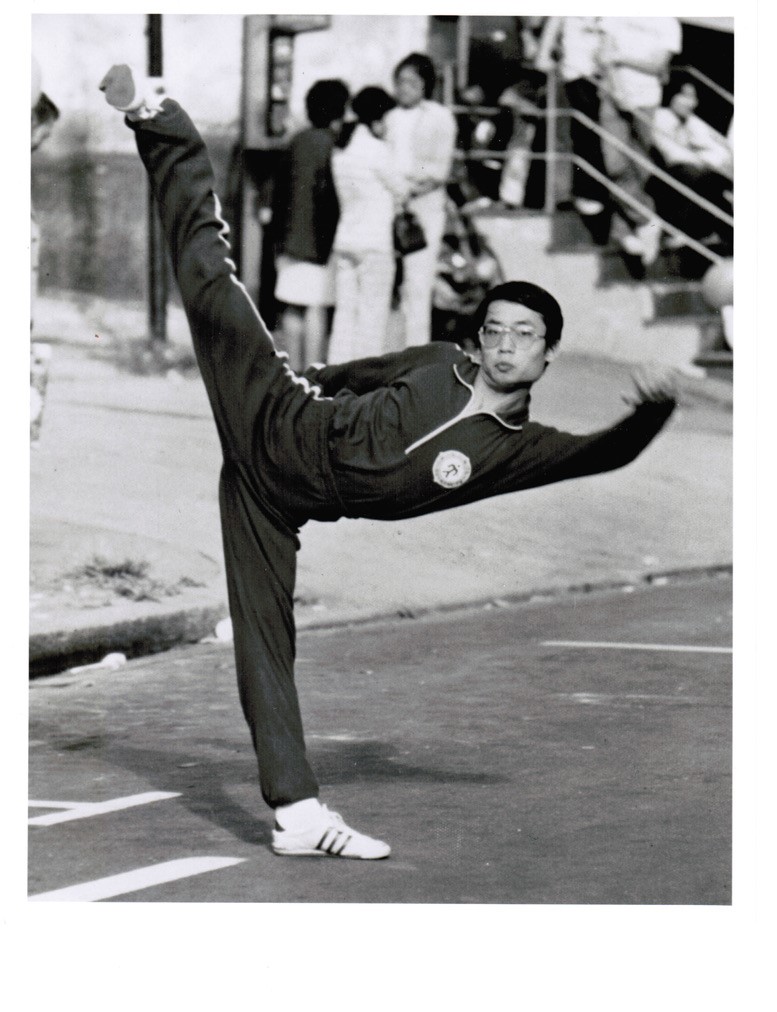
 When You Feel Like You’re Not Enough
 The Simple Wisdom of Huineng’s Zen Poem – And Why it Matters Today
 The ancient words “Some were born great, some have greatness thrust upon them” have echoed through centuries, often evoking images of destiny and fate. But beneath this poetic duality lies a deeper truth about courage, the force that turns potential into action, whether that potential arrives as a birthright or burden. Courage, it seems, is both the flame we carry, and the spark stuck from life’s friction.
 Stop Standing in Your Own Way
 The Sacred Letting Go: When Arrows Fly Toward Unseen Horizons
 The Alchemy of Self: Transforming Shadows into Light